Continuing Care Assistant
Build hands-on care skills to support older adults and clients with complex needs.
Request Info
Fill in the form below and we will contact you as soon as possible.
Not a Canadian citizen or permanent resident? Use the international form
Canadian citizen or permanent resident? Use the domestic form
Nova Scotia CCA Recognition
The Halifax CCA program is recognized by the Health Association of Nova Scotia (HANS) and guided by the Nova Scotia Department of Seniors and Long-Term Care (DSLTC).
About the Program
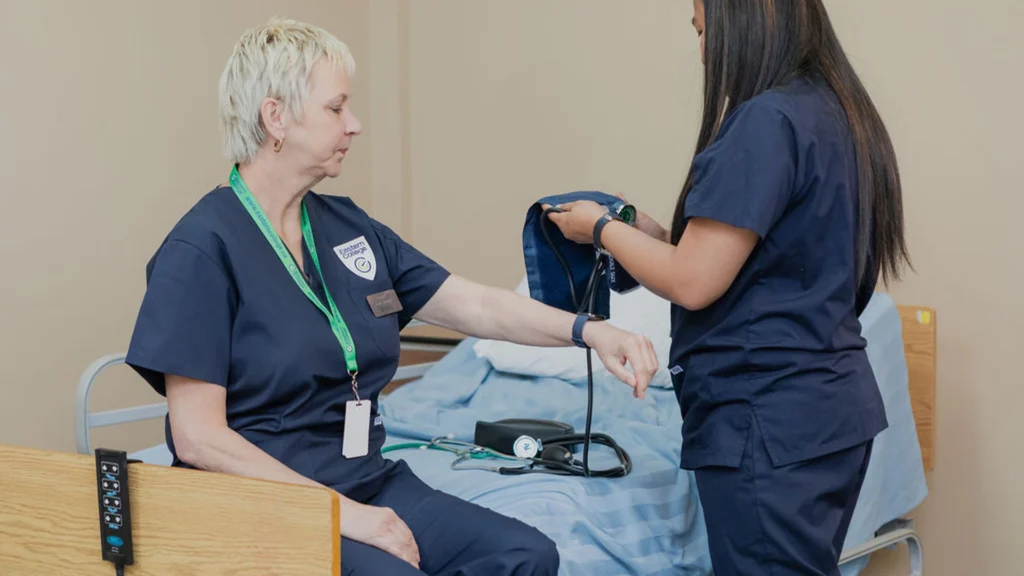
Prepare for a caring role supporting older adults, recovering clients, and people living with dementia or requiring palliative support. Build practical skills in personal care, safe mobility, nutrition, medication support, mental wellbeing, and continuing care through labs, simulations, and practicum experiences.
Curriculum & Program Details
Program Details
- Build practical continuing care skills through classroom learning, labs, simulations, and practicum experiences.
- Learn personal care, safe handling and mobility, nutrition, medication support, dementia care, palliative care, and mental wellbeing.
- Prepare to support clients in long-term care, home care, and other healthcare settings.
Program Fees
| Fees | Amount |
|---|---|
| Tuition | $11,990.00 |
| Total Domestic Tuition and Fees | $11,990.00 |
| International Student Fee International students only, in addition to the total above | $2,998.00 |
Price displayed reflects current domestic tuition and includes applicable taxes and ancillary fees. Pricing is subject to change. Fees may vary for out of province and international students.
Pricing above is valid for all domestic students for programs that start before March 31, 2027.
Course Listing: Nova Scotia
-
Body Structures, Functions, & Related Health Issues 54 hours
This is an introductory course of basic body structures, functions, and related health issues common within Continuing Care. The student will gain a basic understanding of the normal structure and function of the body systems and be introduced to signs and symptoms of ineffective functioning, common illnesses/conditions, and the related care implications. This course aims to connect body anatomy and physiology to the technical skills and tasks of a CCA to draw the connection between theory and practical application to the role of a CCA.
-
Dementia: Understanding The Journey 27 hours
No two persons experience dementia in the same way, and there is no singular approach to supporting persons living with dementia. The course provides a range of information that should be used to support and enhance the student’s approach. Each of the sessions leads into the next, supporting the care practices collaboratively and collectively. The session addressing behaviours is situated toward the end of the course. In doing so, we want the student, as a care provider, to understand that if they approach care for persons with dementia in ways that are appropriate and meaningful for them, they can reduce the potential for, or eliminate, behaviours that are difficult to understand. Earlier sessions provide the information to set up relationships, approaches, and environments that best meet the needs of the person living with dementia. As the course progresses, tools and approaches are offered to assist the student in recognizing when to change their own perceptions and approach. The program finishes with a session dedicated to the student as the care provider and their role within a care team, as well as barriers they may encounter.
-
CCA Fundamentals 30 hours
This course introduces learners to the CCA role, the Framework, and the healthcare sector. It sets expectations and provides a theoretical understanding of the workplaces of a CCA. Learners will also begin to develop awareness of self-care and learn the importance of self-care as a CCA. Instructors will provide a psychologically safe space for learners to explore and learn about self-care, EDIRA, and psychological safety.
-
Practicum Part 1: Clinical Placement 108 hours
The learner will apply technical and essential skills identified in the Practicum Guide: Skills Checklist – Skills Development for supporting persons in care with the oversight and guidance of a CCA mentor within a Long-Term Care facility. The learner will demonstrate technical and essential skills identified in the Practicum Guide: Skills Checklist – Skills Assessment within a Long-Term Care facility under direct supervision by a Primary or Secondary Instructor.
-
Food Handling 7 hours
This course will provide you with food safety information required for your role. Topics include cleaning and sanitizing, proper food handling and temperatures, pest control, food safety management, foodborne illness, receiving, storage and contamination of food.
-
Integrative Skills 30 hours
This is a lab and simulated course that integrates theoretical learning across the program into practical experience. The objective of this course is to provide real-world simulated scenarios that incorporate as many of the CCA competencies and skills across a full process/task sequence. The instructor’s main objective is to connect the theoretical learning from Course 8 Body Structures and Functions into application to draw the connections from theory into practice. This is a test-try learning environment where the instructor is encouraged to pause, change a status/condition/illness/need, and resume during a scenario. Instructors can also pause and restart scenarios.
-
LEAP – PSW 10 hours
LEAP™ Personal Support Worker is a course that provides personal support workers and care aides with the essential competencies to provide a palliative care approach.
-
Mealtime Assistance 30 hours
The focus of this course is on basic nutrition and entry-level proficiency for preparing and cooking meals. The learner will understand the role of nutrition to health and wellbeing and the various types of therapeutic and special diets common in Continuing Care. Learners will demonstrate the preparing and cooking of basic meals, developing entry-level cooking skills.
-
Medication 30 hours
This course allows the learner to cultivate an awareness of medications and the role of the CCA in supporting the needs of a person. The SoP and the Framework identifies the role of a CCA in medication administration and learners gain hands on experience applying medicated and non-medicated drops, ointments, and creams. Learners will gain a basic understanding of medications and the effects to support their tasks and responsibilities specified in the SoP.
-
Practicum Part 2: Mentorship Home Care 40 hours
The learner will consistently demonstrate entry-level technical and essential skills identified in the Practicum Guide: Skills Checklist – Mentorship for supporting persons in Home Care with the oversight of a CCA mentor.
-
Practicum Part 3: Mentorship Open 56 hours
The learner will consistently demonstrate entry-level technical and essential skills identified in the Practicum Guide: Skills Checklist for – Mentorship supporting persons in Home Care, long term care, or acute care setting with the oversight of a CCA mentor.
-
Occupational Health and Safety 4 hours
This introductory course is intended to give you an overview of the eight key aspects of workplace health and safety in Nova Scotia workplaces, including: (i) the Internal Responsibility System; (ii) Worker and employer rights & responsibilities; (iii) Workplace health and safety policy and programs; (iv) Health & safety committees and representatives; (v) Hazard identification and control; (vi) Investigating incidents; and (vii) Safety training.
-
Practicum Essentials 60 hours
In this course learners will gain the knowledge and skills needed to successfully participate in lab demonstrations and practicum placements. This course focuses on the fundamentals of a CCA deepening their understanding of the SoP and the Framework by exploring and practicing the behaviours and essential skills of a CCA. Additionally, learners will build the foundational knowledge of teamwork, reporting, and documenting, infection control, and risk management to develop the theoretical foundation to inform and shape their approach to care.
-
Personal Care 90 hours
This course is an introduction to the principles relating to activities of daily living and personal care. The learner will learn, practice, and demonstrate the practical skills necessary for respectfully, safely, and effectively providing personal care by providing meaningful engagement and applying the philosophy of care.
-
Safe Handling & Mobility 48 hours
The learner is introduced to the principles of body movement and safety to be followed during the performance of all direct and indirect assistance activities in the classroom, lab, and placement settings. The learner will acquire and demonstrate the knowledge and skills necessary to ensure personal safety and that of the person when assisting with positioning and transferring. The learning of this course aligns and integrates with PACE.
-
Social & Mental Wellbeing 30 hours
This course prepares learners to recognize and support persons living with various mental health disorders. The course introduces types of mental health disorders, identifies impacts of mental health disorders, neuro-affirming care, and prevention and intervention strategies for behaviour expressions. This course extends the knowledge learners acquired from Course 3 – DUTJ by providing practical application for behaviour expressions.
-
WHMIS 4 hours
The WHMIS course teaches you the basic elements of WHMIS 2015 and the Global Harmonization System. This covers the safety measures and guidelines to be followed when exposed to or working with hazardous materials.
-
CPR and First Aid (16)-HY 16 hours
This workshop provides participants with comprehensive First Aid and CPR techniques and knowledge to respond to emergencies in the home or workplace. Several topics are covered from basic first aid such as cardiovascular and breathing emergencies, CPR Healthcare Provider Level, bone and joint injuries and severe bleeding. Upon successful completion of this course, students will achieve the Standard Level First Aid and Healthcare Provider (BLS-Basic Life Support) Level CPR.
Admission Requirements
- Grade 12 certificate or equivalent:
- o GED or CAEC equivalent to grade 12
- o High School Graduate with an IPP/IEP identified, must meet minimum literacy and numeracy skills
- o Mature Learner, minimum of 19 years of age and meet a minimum literacy and numeracy skills
- Approved Academic Testing Tools and scores set by CCA Program Administrator
- o TABE 8
- o Wonderlic 12
- o TOWES 2
- o CAAT 10
- Criminal Record and Vulnerable Sector Check issued through a Canadian Police Information Check (CPIC) issued within 6 months of start date
- o Note: The presence of a criminal record does not automatically disqualify a candidate from the CCA Program. Admission consideration for non-violent convictions will be determined on a case-by-case basis using the CRC/VSC Policy
- Newcomers with less 6 months in Canada require a Police Clearance Check (e.g., Federal Background Check used for immigration)
- Persons applying for admission to the Continuing Care Assistant (CCA) program while resident outside Canada or who have not been resident in Canada for the prior six months may use the form of International Police Certificate identified by Immigration, Refugees and Citizenship Canada at https://www.canada.ca/en/immigration-refugees-citizenship/services/application/medical-police/police-certificates/how.html in lieu of the requirement for persons applying from within Canada who have six months prior residence in the country, i.e. satisfactory results from searches through a Criminal Record Check (CRC) and Vulnerable Sector Search (VSS) through the Canadian Police Information Centre (CPIC).
- Condition to this requirement:
- o The college will require students admitted with this prerequisite to complete the CRC and VSS searches as soon as they are eligible to apply for the screenings.
- o The college shall provide program placements and related work opportunities for students with employers who will accept the International Police Certificate in place of the CRC and VSS.
- Applicants who are admitted prior to turning 18 years must submit a criminal record and vulnerable sector check prior to 1st day of practicum-clinical placement.
- Approved Language Testing Tools and scores set by CCA Program Administrator
- o Duolingo 95
- o CELBAN Level 7
- o CELPIP Level 7
- o IELTS (General Testing) Band Score – 6
- o IELTS (Academic Testing) Band Score – 5.5
- o ISANS English Language Testing Level 7
- STUDENT FORMS
- Disclosure to International Student Applicants – Employability
- Disclosure to Student Applicants Transportation Requirements
- PRACTICUM REQUIREMENTS
- Student must provide a 2-Step TB test with Negative results or a Chest X-ray ruling out TB symptoms for Placement requirements
- Students may be required to provide additional Health Records depending on Placement Host requirements
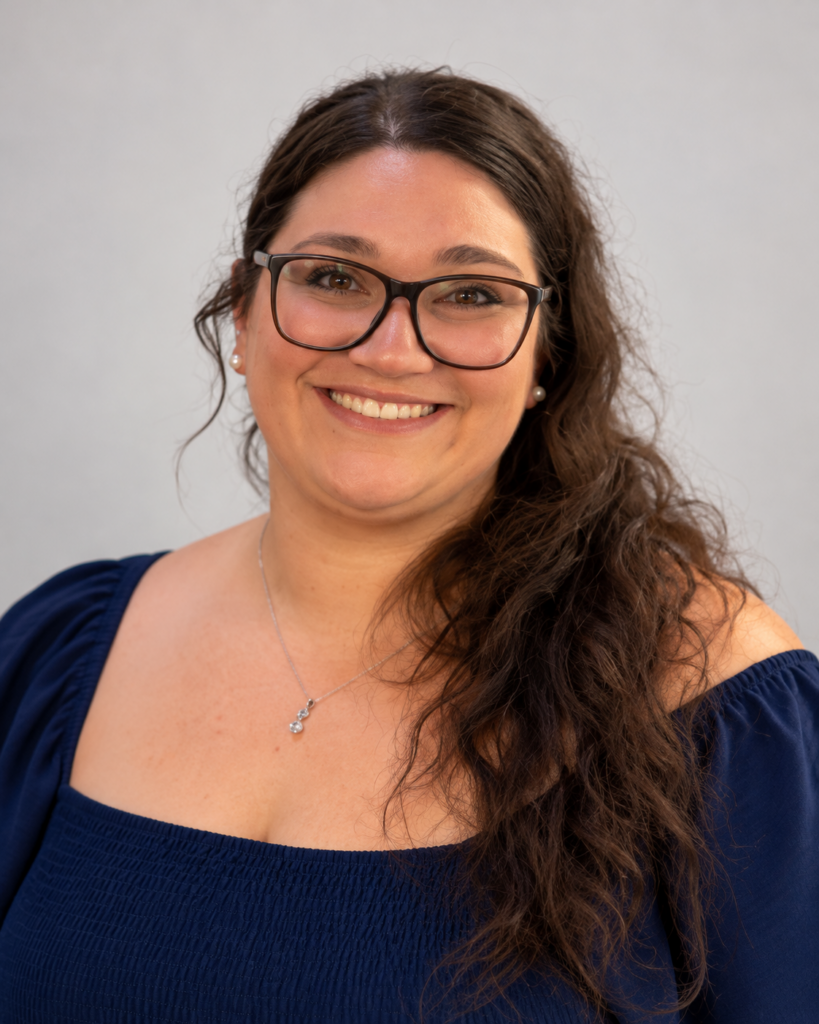
“What stands out about this program is how much hands-on practice students get before working directly with clients in real healthcare settings.”
Faculty Head/Instructor
Kayla Albright
Faculty Head/Instructor
Hear from Graduates
What does a Continuing Care Assistant do?
Continuing Care Assistants support individuals with personal care, mobility, nutrition, medication assistance, and other activities of daily living while promoting dignity, independence, safety, and quality of life.
What will I learn in the CCA program?
You will develop skills in personal care, safe mobility and transfers, dementia care, nutrition and mealtime assistance, medication assistance, mental wellbeing, communication, safety, and other essential areas of CCA practice.
Will I get hands-on experience during the program?
Yes. You will practice CCA skills through labs and simulations and complete 204 hours of clinical experience, including long-term care, home care, and mentorship experiences with certified CCAs.
Do I need to complete a certification exam after graduating?
Yes. After successfully completing the program requirements with an overall GPA of at least 70%, you are eligible to write Nova Scotia’s provincial CCA Certification Exam. Eastern College also provides graduates with review support to help them prepare.
Where can I work after completing the CCA program?
CCA graduates can work in settings such as long-term care, home care, residential care, acute care, and community-based care. Roles may include Continuing Care Assistant, Care Team Assistant, Home Support Worker, and Program Worker.